

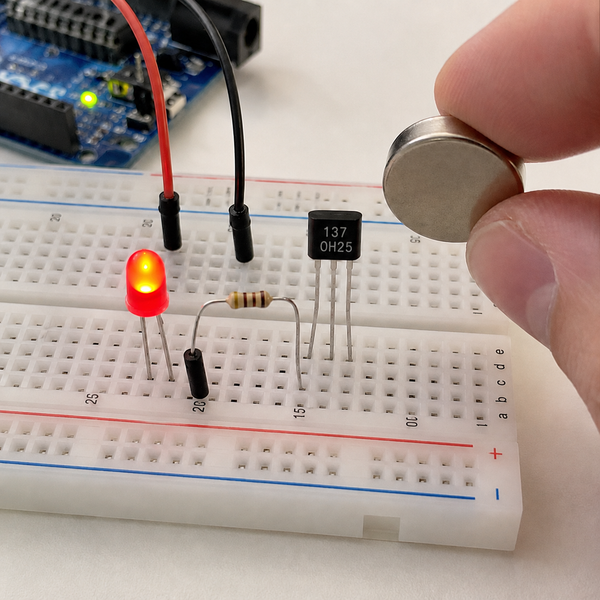
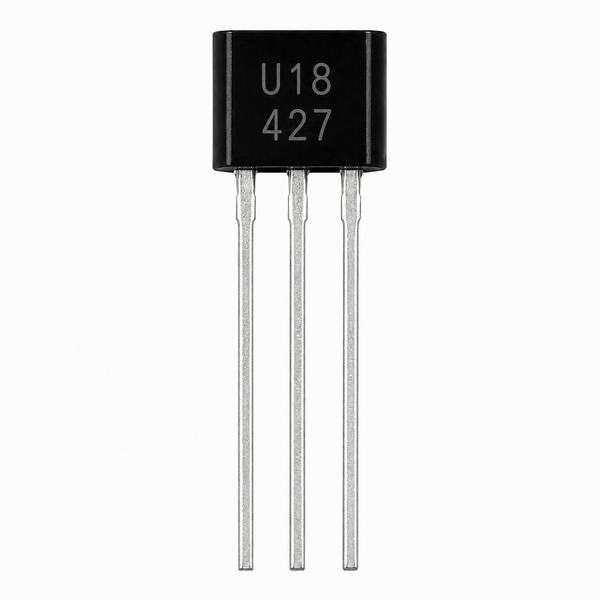
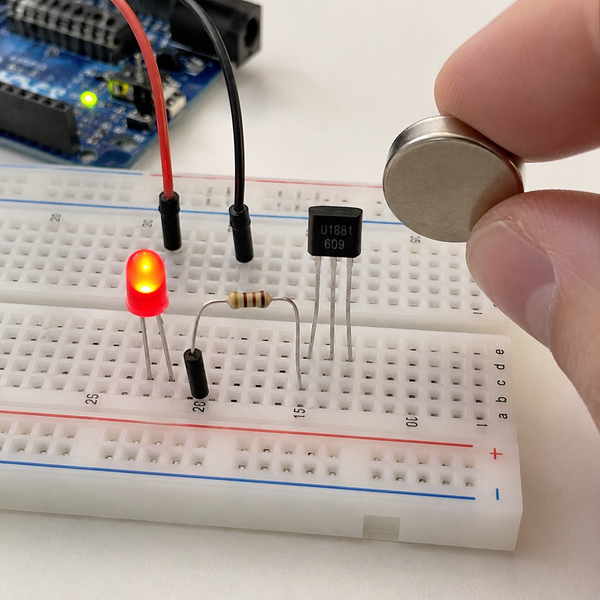
Detect magnetic fields with no moving parts and nothing to wear out. Our range covers position sensing, speed and RPM detection, current measurement and proximity work in robotics, 3D printers and general electronics projects.
Not sure which one you need? There are three types and they look identical in the bag. Read Hall Effect Sensors Explained: Switch vs Latch vs Linear for a plain-English walkthrough of the differences, wiring, code and the two mistakes that catch nearly everyone out. Or grab the sample pack and try all six on your own bench.
The three types in short
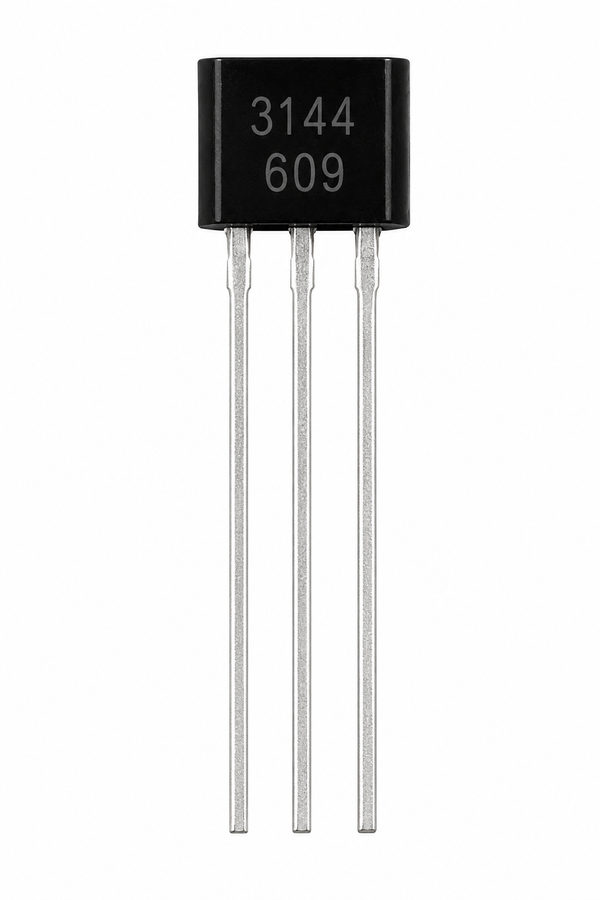
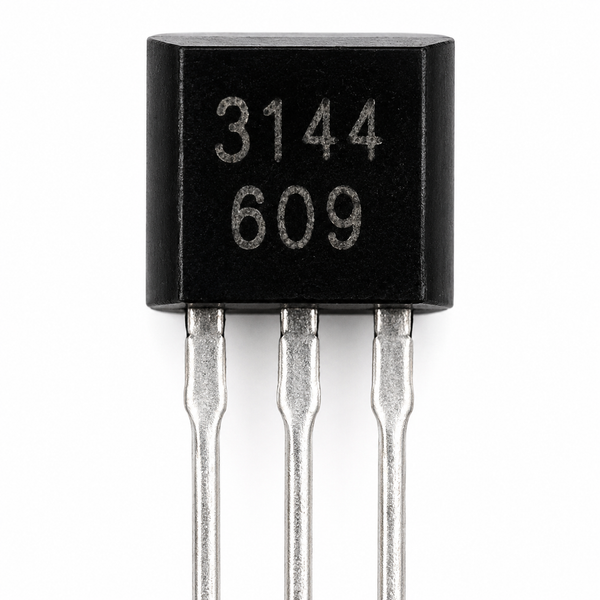
- Switch (A3144, OH137). On while a magnet is near, off when it leaves. The right answer most of the time.
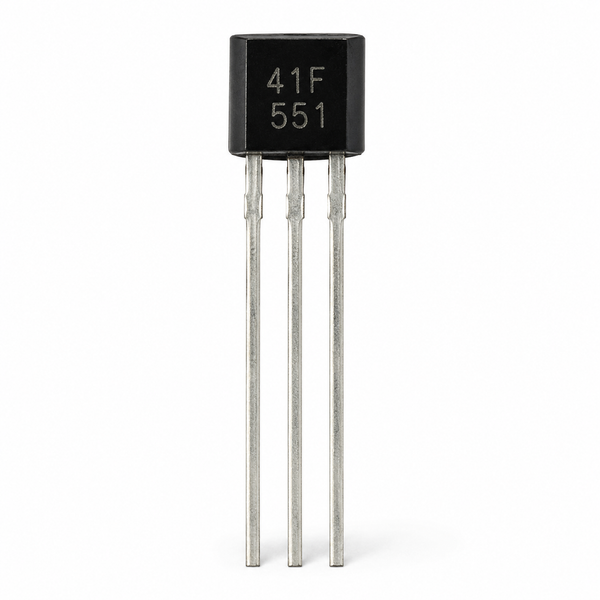
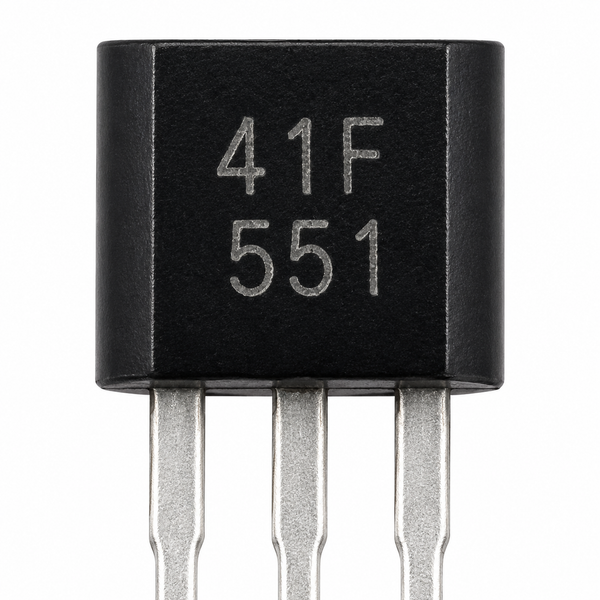
- Latch (41F, US1881). South pole turns it on, north pole turns it off, and it holds state in between. For alternating pole rings and brushless motors.
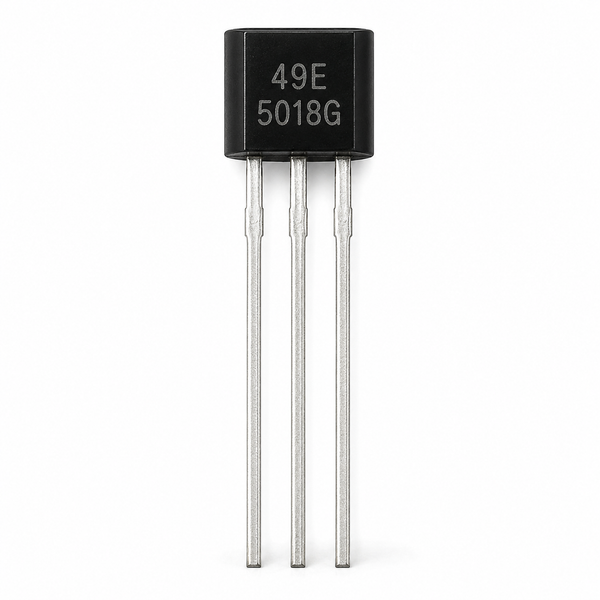
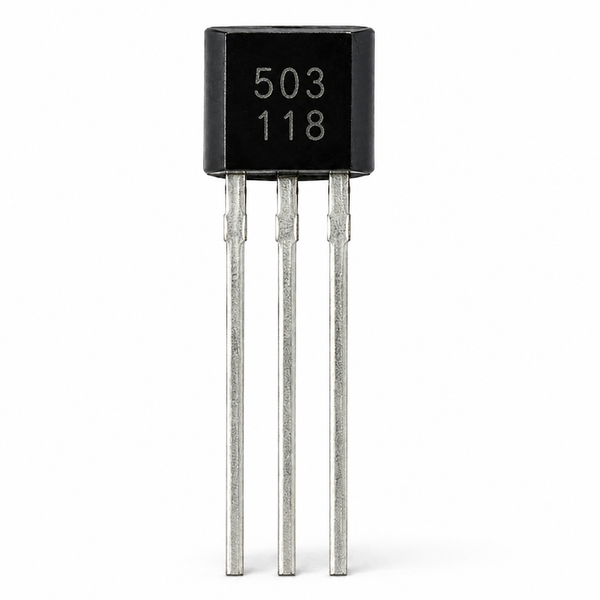
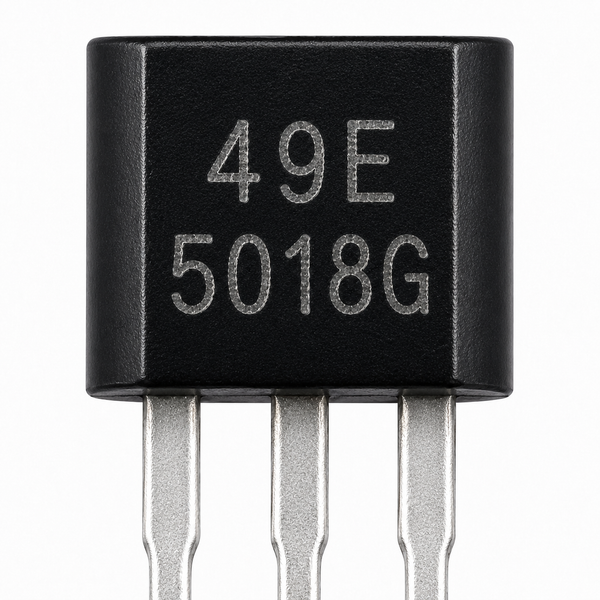
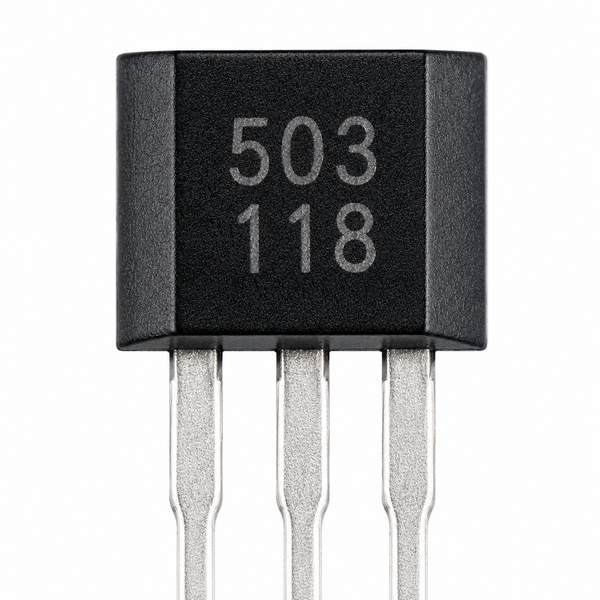
- Linear (49E, AH3503). Analog output that tracks field strength and polarity, for when you need to measure rather than just detect.
Why hall effect
- Non-contact sensing, so no mechanical wear and a much longer service life
- Wide supply range, with the digital parts running anywhere from 3.5V up to 24V
- Works with Arduino, ESP32 and Raspberry Pi, and needs no library or driver module
- Reliable in rough conditions, including dust, moisture and vibration that would kill a mechanical switch
- Senses through a gap, including through plastic and non-ferrous enclosure walls
All parts are held in New Zealand stock and ship from Te Awamutu. Volume pricing applies from 10 units.